Overview
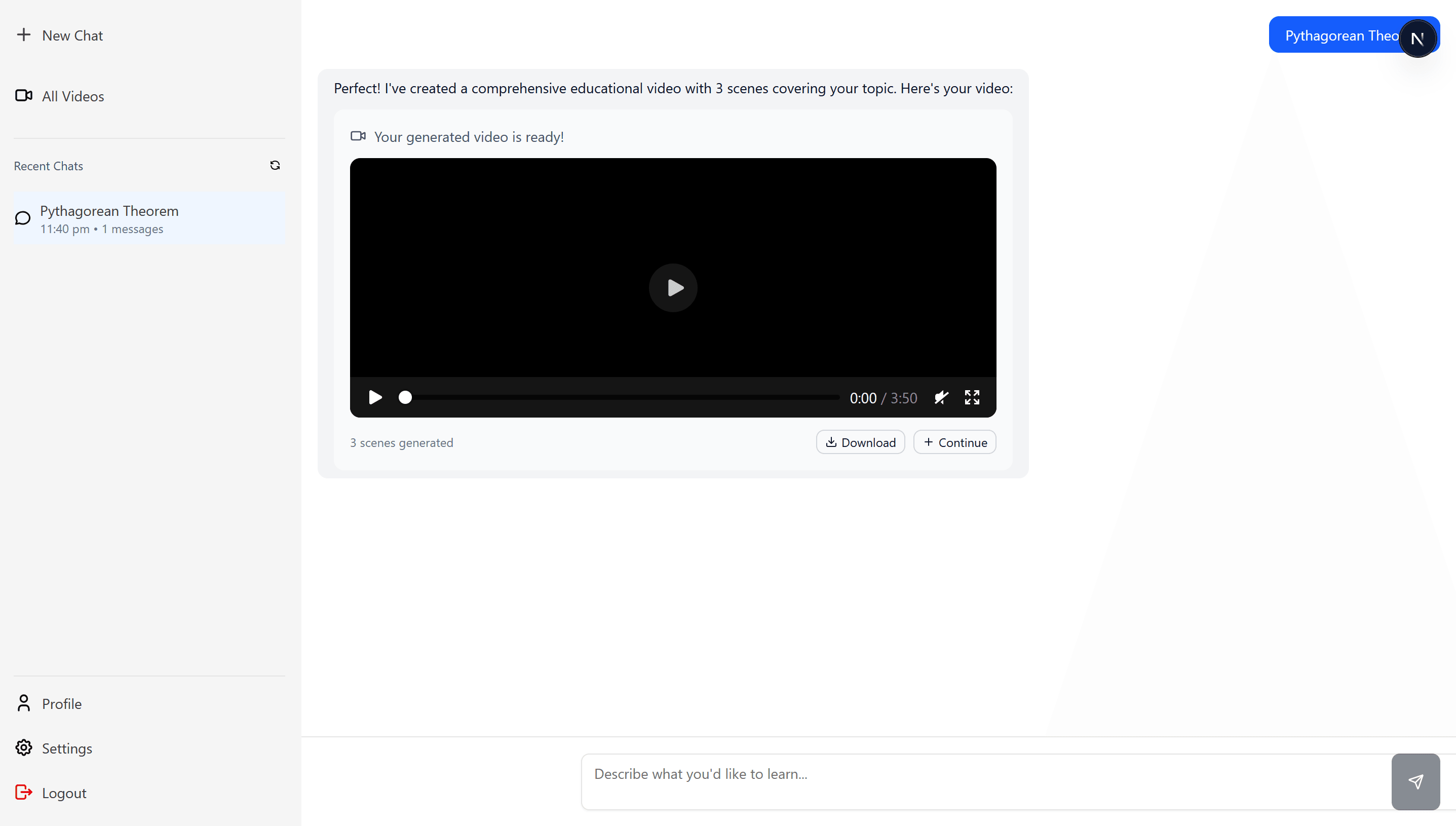
EdVid is an AI-powered educational video generator designed to simplify the creation of complex explanatory content. It leverages Manim (Mathematical Animation Engine) to programmatically generate high-quality animations, making it easier for educators and creators to visualize abstract concepts without deep video editing expertise.
The core idea was to bridge the gap between technical script-writing and visual output, allowing users to focus on the content rather than the animation curves.
Problem
Creating high-quality educational videos, especially those involving math or physics, is incredibly time-consuming.
- Traditional tools (After Effects, Premiere) have a steep learning curve.
- Manim is powerful but requires writing raw Python code, which isn't accessible to everyone.
- Consistency is hard to maintain across a series of videos when doing everything manually.
Solution
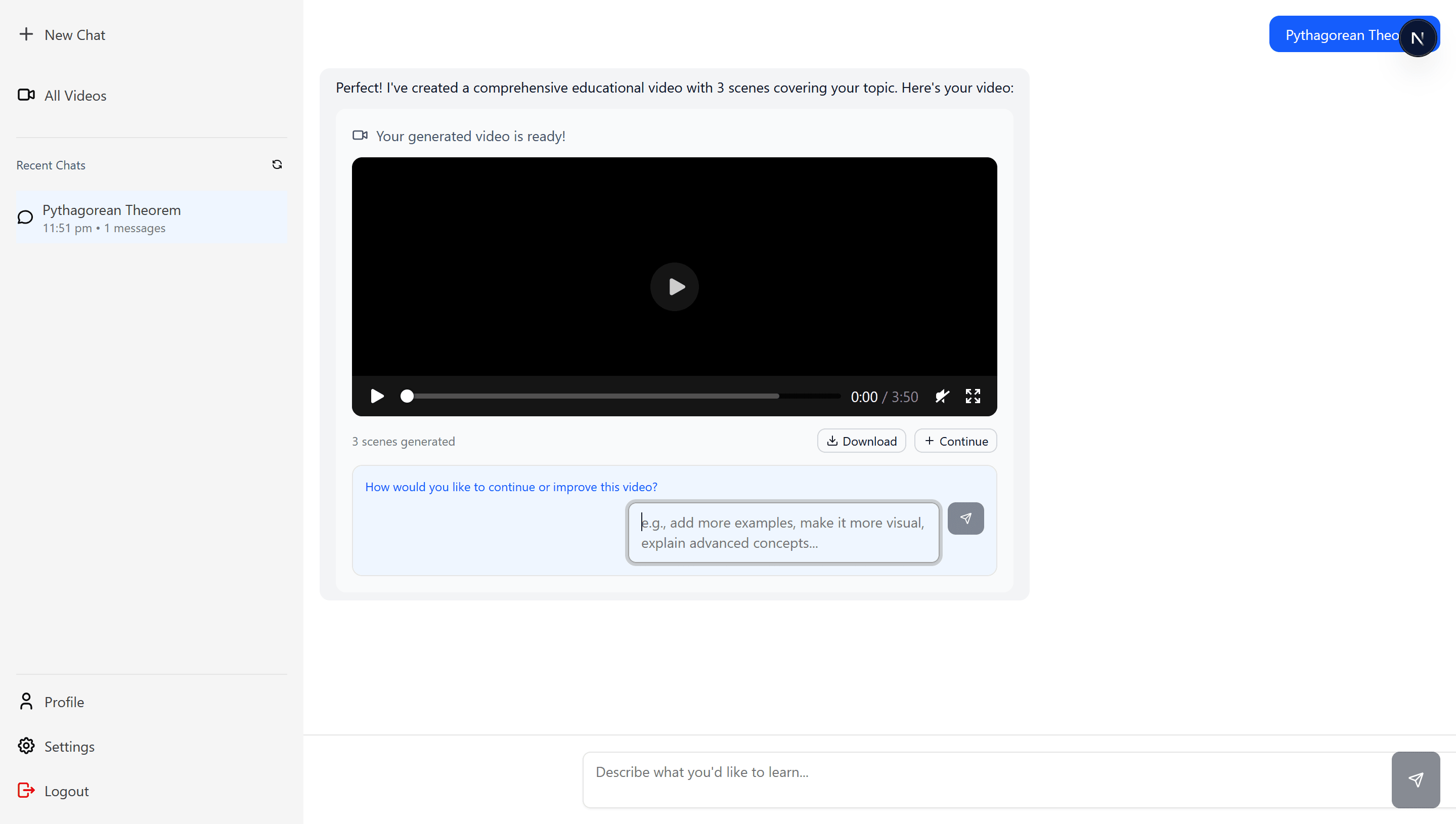
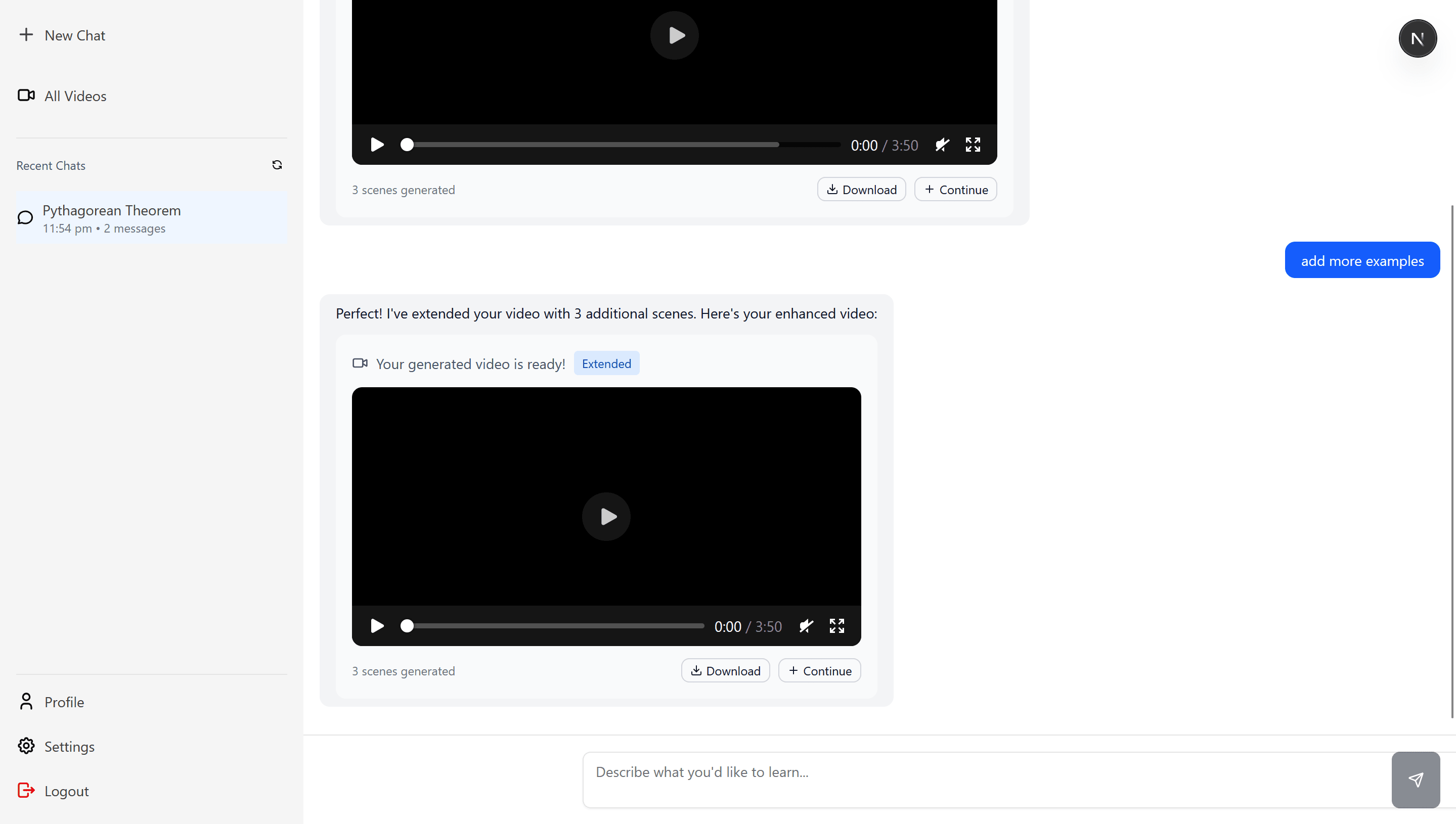
EdVid provides a web-based interface where users can input a script or a set of key concepts. The system then:
- Analyzes the text using an LLM to identify key entities and relationships.
- Generates Manim code corresponding to those visualizations.
- Renders the scene in the background.
- Stitches the video together with voiceover (if selected).
This transforms a hours-long workflow into a minutes-long process, democratization access to high-quality educational animations.
Architecture
The system is built as a modern web application with a heavy backend processing pipeline.
- Frontend: Next.js (React) for the dashboard and editor.
- Backend API: Python (FastAPI) to handle the logic and interface with Manim.
- Queue System: Redis/Celery for handling long-running rendering tasks.
- Storage: AWS S3 for storing generated assets and final videos.
Challenges
1. Sandboxing Executable Code
Allowing an LLM to generate code that is then executed on the server is inherently risky. We had to build a robust sandboxing environment (using Docker containers) to ensure that the generated Manim code couldn't access the host system or network in unauthorized ways.
2. Latency
Video rendering is CPU-intensive. To keep the UI responsive, we implemented a WebSocket connection to stream progress updates back to the client in real-time. This gave users immediate feedback even if the final render took a few minutes.
Learnings
Building EdVid reinforced the importance of asynchronous architecture for compute-heavy applications. Initially, we tried to handle requests synchronously, which led to timeouts and a poor user experience. Moving to a job queue architecture was a critical pivot that made the system scalable.
It also highlighted the current limitations of LLMs in generating perfect syntactic code for niche libraries like Manim. We had to implement a self-correction loop where the system attempts to run the code, catches errors, feeds them back to the LLM, and retries.